
.jpg)
Over the past few years, the aspiration to become a doctor has gone beyond Indian shores. With NEET becoming competitive and the scarcity of government medical seats, most students are now looking at studying abroad for an MBBS degree. Russia, Georgia, Kazakhstan, the Philippines, Ukraine, and China have become favorite destinations for Indian medical aspirants. But before making this important decision, it is imperative to know the extent of MBBS abroad in India, ranging from career prospects and recognition to challenges and long-term advantages. This blog delves into these areas in depth, enabling students and parents to make informed decisions.
The number of MBBS candidates in India increases year by year, but the seats available in government colleges is few. In India, medical schools offer about 90,000 MBBS seats; approximately 50,000 of these are in government colleges. This creates a mismatch and compels most of the eligible students to look for alternatives outside the country.
Private medical colleges in India demand hefty fees from anywhere between ₹50 lakhs and more than ₹1 crore for the complete course. In contrast, most foreign universities only demand a much lower fee for the MBBS course, ranging from ₹20 lakhs to ₹50 lakhs, depending on the nation and institution.
Most universities overseas do not require any donation or capitation fee. The admission process is simple, and universities select candidates based on merit and eligibility.
Some universities overseas have recognition from the National Medical Commission (NMC), the World Health Organization (WHO), and other foreign medical councils. Because of this recognition, students can come back to India and practice after passing the screening tests.
Overseas education offers students exposure to modern medical facilities, varied clinical practices, and global standards of patient care, rendering them competent.
Students should have passed 10+2 or equivalent with Physics, Chemistry, Biology, and English as mandatory subjects. They should have got at least 50% aggregate marks in the PCB for the open category and 40% marks for reserved categories.
From 2018, Indian students have been required to qualify NEET (National Eligibility cum Entrance Test) to pursue MBBS abroad and get eligibility for practice in India after graduation.
The student should be 17 years of age as of December 31 of the year of application.
Certain universities demand English language proficiency certificates via tests such as IELTS or TOEFL, but most in Russia, Ukraine, Georgia, and Kazakhstan don’t. They provide MBBS education in English without tests.
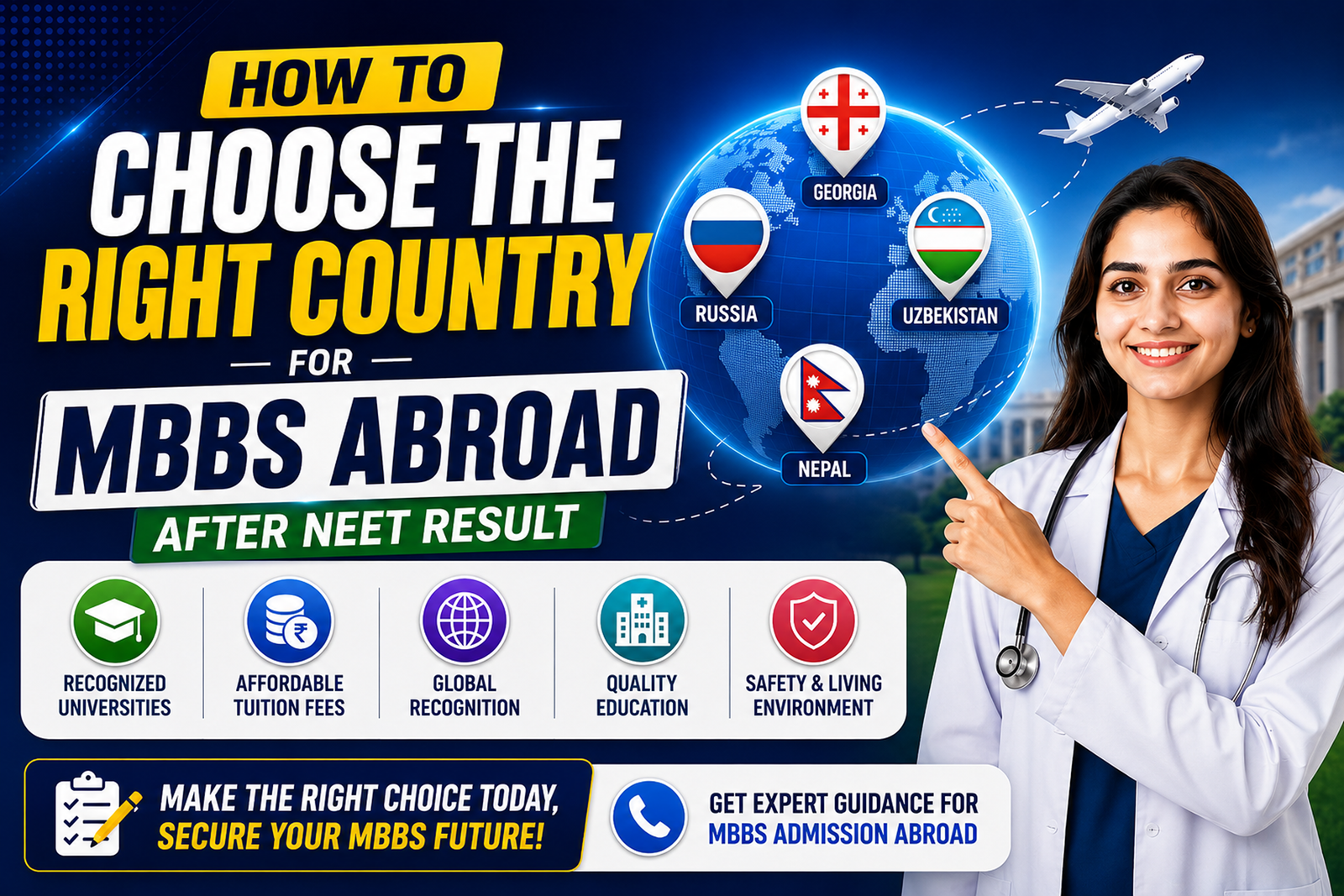
Russia is among the most sought-after countries by Indian students because of its robust medical education system, low fees (₹20–35 lakh), and internationally accepted degrees. The universities in Russia have good infrastructure, well-equipped labs, and good hospital collaborations for practical training. The language of instruction is English, which helps Indian students easily adjust.
Georgia has become popular for its European curriculum, up-to-date hospitals, and qualified staff. Instructors teach all courses in English, eliminating language barriers. Tuition costs ₹25–35 lakh, and living expenses are less than in most countries in Europe. The safe and friendly atmosphere and quality education make it a top contender.
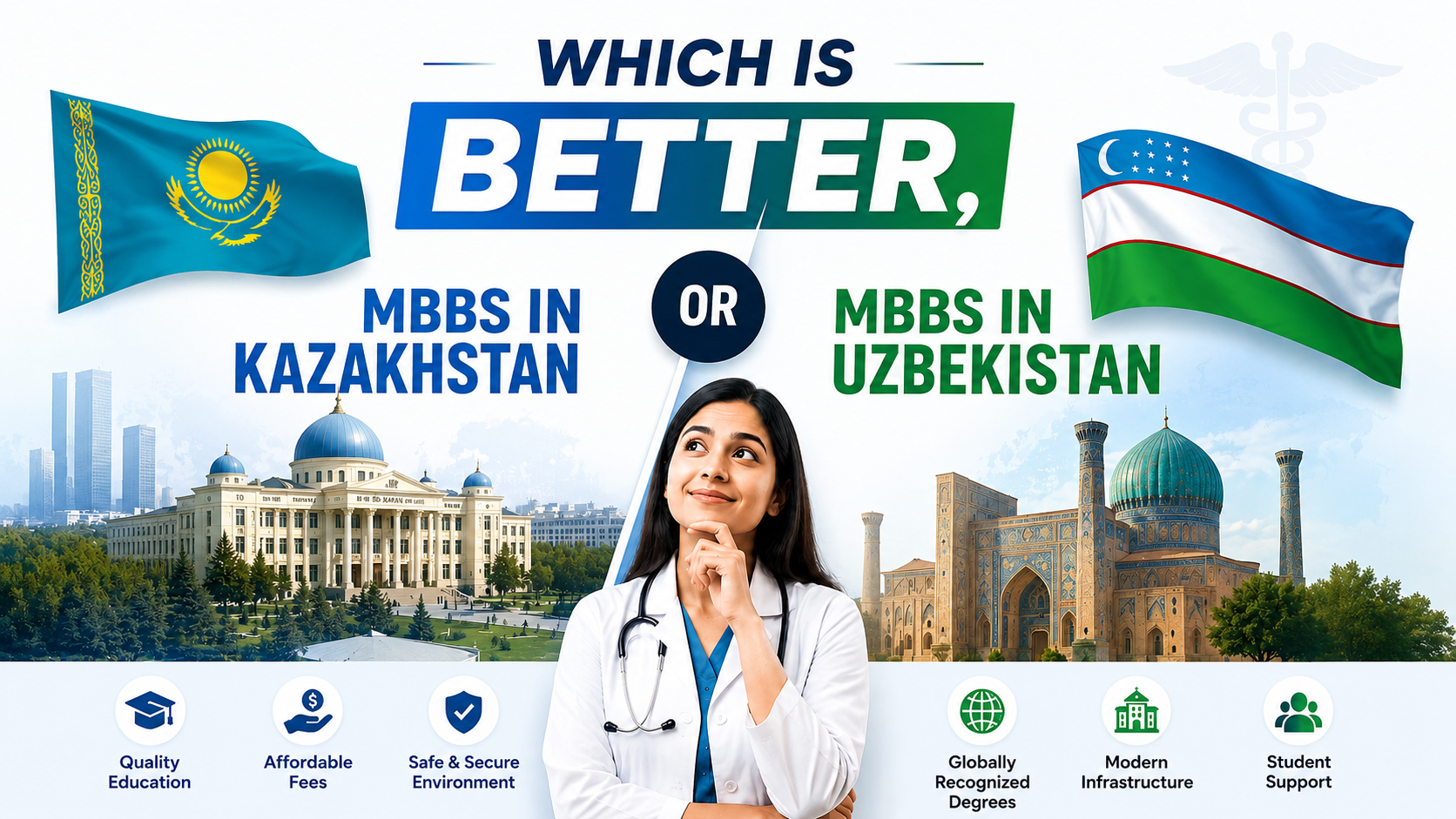
Kazakhstan provides an Indian-standard curriculum for much less (₹15–25 lakh). Early exposure to clinical training and English-medium education makes it desirable for students who aim to repatriate to India. Low living expenses and a multicultural environment are additional positives.
Kyrgyzstan is famous for its affordable MBBS programs (₹18–25 lakh) and practice-oriented education. These programs use English as the language of instruction and offer excellent hospital training facilities. Low cost of living and easy admission process make it suitable for most Indian students.
Uzbekistan is also becoming a popular choice because of affordable fees (₹15–22 lakh), English-medium programs, and NMC accreditation. The teaching emphasizes both theory and practical clinical training. Similar cultures to India and safe surroundings facilitate the easy settling down of the students.
Nepal is a popular option due to the country’s proximity to India, shared food and culture, and an Indian-patterned curriculum. Fees are from ₹30–45 lakh. All programs are in English with excellent early clinical exposure. Familiarity with surroundings and a friendly Indian student community make the transition seamless.
|
Country |
Tuition Fees (₹ lakh) |
Medium |
Living Cost (₹ lakh) |
NMC Recognition |
|
Russia |
20–35 |
English |
10–15 |
Yes |
|
Georgia |
25–35 |
English |
10–12 |
Yes |
|
Kazakhstan |
15–25 |
English |
8–10 |
Yes |
|
Kyrgyzstan |
18–25 |
English |
8–10 |
Yes |
|
Uzbekistan |
15–22 |
English |
7–10 |
Yes |
|
Nepal |
30–45 |
English |
10–12 |
Yes |
Only MBBS degrees from NMC-recognized universities are valid in India. Students should verify this list prior to enrolling in any university overseas.
Students who study MBBS overseas must clear the FMGE (also referred to as the MCI Screening Test) in order to receive a license to practice in India. The test determines if their medical knowledge is up to the mark in India.
From 2024, the National Exit Test (NEXT) will replace FMGE and act as a licensing examination and a PG entrance exam. This will establish a uniform standard for all medical graduates, either from India or abroad.
Once students clear the FMGE/NEXT, they can register with the State Medical Council and begin practicing as a licensed physician in India.
Students can take NEET PG, INI-CET, or other postgraduate medical entrance tests in India after passing the screening test.
Students can become specialists or practice abroad by passing licensing exams like USMLE (USA), PLAB (UK), AMC (Australia), etc.
MBBS graduates from overseas may also pursue medical research, become faculty members or teachers in private medical schools, or join healthcare organizations.
The overall cost of pursuing MBBS abroad is comparatively lower than private colleges in India. Students can finish the entire course, including residing costs, in a decent price range.
Most foreign universities provide well-equipped advanced laboratories, simulation centers, and newly equipped hospitals, ensuring better hands-on training.
Working with students and staff of different nationalities builds communication skills, cultural intelligence, and flexibility.
The admission process is less complicated, with no concessions or donations involved, and most universities provide direct admission based on 12th and NEET scores.
The pass percentage in FMGE has historically been low, ranging from 15% to 25%. Students must prepare thoroughly to clear this exam and practice in India.
Students might face initial difficulties adjusting to local language, food, and cultural practices in the host country.
Indian diseases might not be the kind most people are used to dealing with internationally, so initial practice in India might be difficult without additional training.
Being away from home for 5-6 years might be emotionally and mentally demanding for most students.
|
Aspect |
MBBS in India (Government) |
MBBS in India (Private) |
MBBS Abroad |
|
Average Fees |
₹1-3 lakh per year |
₹10-25 lakh per year |
₹3-8 lakh per year |
|
Admission Difficulty |
Very High |
Moderate |
Moderate |
|
Donations/Capitation |
No |
Yes |
No |
|
Recognition |
Automatic |
Automatic |
After FMGE/NEXT |
|
Infrastructure Quality |
High (limited seats) |
Varies |
Generally good |
|
Country |
FMGE Pass Rate (%) |
|
Russia |
20–25% |
|
Kazakhstan |
15–20% |
|
Georgia |
20–25% |
|
Uzbekistan |
18–22% |
|
Nepal |
25–30% |
|
Kyrgyzstan |
18–22% |
Note: These rates are approximate and may vary yearly.
Verify that your university is on the NMC list to ensure Indian recognition of your degree.
The higher the FMGE pass rate, the better the teaching standards with patterns favoring Indian exams.
Select universities with programs taught in English to prevent language problems during clinical training.
Verify if the university provides up-to-date labs and quality clinical exposure with hospital tie-ups.
Meet with current students and alumni to obtain genuine feedback regarding the quality of education and living conditions.
Vast and lucrative opportunities are available in MBBS programs abroad in India, provided students are adequately informed and prepared. Pursuing medical studies abroad presents a cost-effective, high-standard alternative to the highly competitive and expensive Indian system of medical education. But that, in itself, is a challenge; namely, clearing FMGE/NEXT to practice in India.
If managed well, MBBS abroad can lead to international opportunities, enhance clinical expertise, and set a solid base for a successful medical practice. The students need to research thoroughly, know about eligibility, check for recognition, and prepare themselves mentally to live in a different nation. With the right mindset, MBBS abroad can be the gateway towards realizing the dream of becoming a doctor throughout one’s life.
.png)