.png)
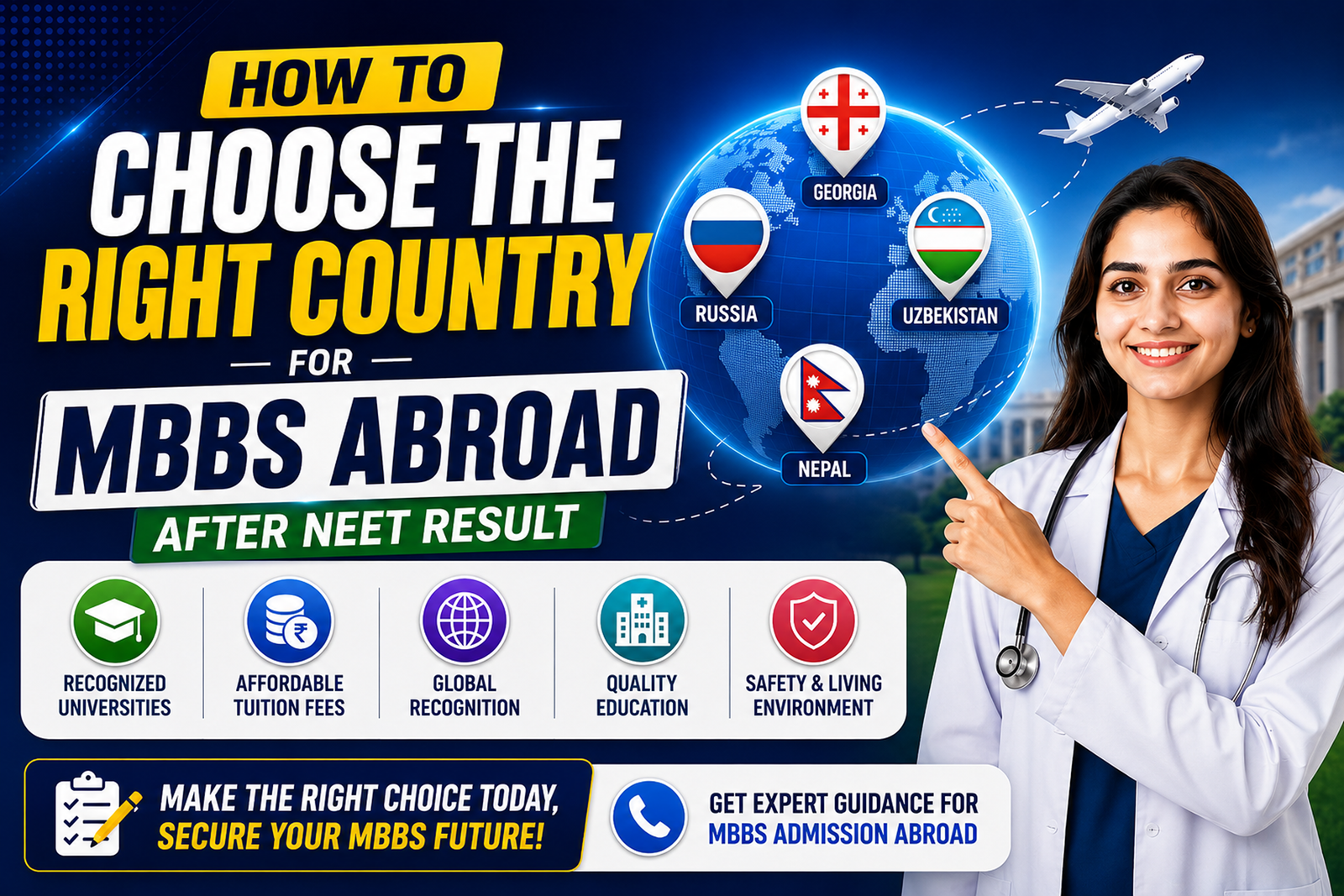
Studying MBBS outside India has emerged as an increasingly popular prospect for students, given the low availability of government seats, high competition among students in NEET, and escalating fees in private medical colleges across the country. Countries such as Russia, Georgia, Kazakhstan, and Nepal draw in many Indian aspirants every year by offering low tuition fees, exposure to international education, and a relatively easier admission process.
Nonetheless, even though studying MBBS Abroad might appear appealing and feasible, it is actually far from it. Students and their parents often base their decisions on inadequate knowledge or under the pressure of aggressive marketing and peers, sometimes neglecting all of the difficulties involved.
Considering the current changes, such as NMC guidelines, FMGE/NEXT eligibility criteria, and new approaches to higher education globally, it has become critical to be well aware of some facts before making a decision.
This blog sheds light on the true difficulties of pursuing MBBS abroad in 2026.
The greatest challenge students are facing nowadays is the constant change of laws and regulations.
As per the guidelines by the NMC, all foreign medical graduates are required to complete their studies at a university that has the following standards:
Students failing to comply with these conditions cannot practice in India. In addition to this, the shift from FMGE to NEXT creates more challenges for candidates.
Now, students should not only pass the university examination but also a standardized licensing examination in India.
It is believed by many students that passing FMGE or NEXT will not be much more difficult; however, data reveal the exact opposite.
The passing percentage of FMGE is typically average, which ranges between 20% to 45%.
Why is there a low pass rate?
It must be understood that it is quite easy to get admitted but difficult to become a licensed doctor.
Though several universities claim to conduct their MBBS courses in the English language, in practice, it can be quite different.
For example, in the case of universities situated in Russia, Kazakhstan, Uzbekistan, etc.:
This becomes difficult for students in terms of:
Learning a new language requires effort and commitment, which not all students have.
Not all universities abroad provide the same quality of education. Some universities may not have:
Thus, students end up being enrolled in universities where quantity is more important than quality.
Problem:
Students tend to select universities according to their fee structures instead of their academic reputation.
Clinical exposure forms the crux of all medicine studies. Regrettably, that is where most Overseas universities lag.
The following are among the issues:
Indian government-run hospitals have higher patient flow rates.
|
Factor |
MBBS Abroad |
MBBS in India (Govt Colleges) |
|
Patient Flow |
Low to Moderate |
Very High |
|
Hands-on Practice |
Limited |
Extensive |
|
Language Comfort |
Often Challenging |
Comfortable |
|
Clinical Confidence |
Moderate |
High |
Adjusting to a new environment can prove difficult for students relocating to another country.
The following could affect studies and well-being:
Despite being touted as "affordable," there are many additional expenses that may be overlooked.
Typically include:
|
Expense Category |
Estimated Cost (INR) |
|
Tuition Fees |
₹15–35 Lakhs |
|
Hostel & Accommodation |
₹6–12 Lakhs |
|
Food & Living |
₹8–15 Lakhs |
|
Travel & Visa |
₹2–5 Lakhs |
|
Exam Preparation |
₹3–6 Lakhs |
|
Total |
₹35–70 Lakhs |
Not all the universities where you can pursue an MBBS in foreign countries are recognized either globally or by the Indian authorities. This is one of the major aspects students tend to ignore. By 2026, when there will be new regulations, going to any unrecognized or partially recognized university can hamper your medical career.
It is essential to ensure that the university:
Some of the consequences of ignoring these aspects are as follows:
In addition, even if the university is listed, there might be some universities that do not comply with the updated NMC guidelines, such as the course period and internship program.
That's why at University Sahi Hai, we take necessary actions so that you don't face any problems in the future. With our guidance, you get information about only verified and NMC-compliant universities. Our counselors will do a background check of the university and will also explain its recognition details.
The importance of an internship cannot be overlooked during medical education. But many students face the problem of:
It takes more time for students to join the league of practicing doctors.
Though MBBS abroad appears to be cheap initially, its return on investment is dependent on:
But if the student does not qualify for the test, then the investment might become risky.
The biggest problem related to foreign study is that of the role of consultancies.
Most common problems include:
Students should depend only on authentic guidance sites.
Studying abroad involves a great deal of self-sufficiency.
Students need to:
Failure to practice self-discipline could result in poor academic results and late graduation.
Although many learners hope to pursue postgraduate studies abroad, there are several hurdles:
Thus, the most plausible option is to return to India to undertake postgraduate studies (through NEET-PG/NEXT).
Security is another consideration, particularly for international students far away from their families.
Some issues may involve:
Therefore, the selection of nations and institutions with adequate security arrangements is vital.
All students enrolled in MBBS studies abroad don’t necessarily become physicians.
Other career options that MBBS students can explore include:
A backup option is essential to minimize risks.
Spending 5-6 years abroad could have psychological impacts on students.
They are likely to encounter situations such as:
Getting support from family members, mentorships, and peer groups is vital.
The medical standards and education system differ from country to country.
MBBS students need to:
All the efforts you put into the MBBS program depend on this choice.
Major points to note:
A proper analysis and research will help mitigate many issues.
An MBBS Abroad program in 2026 should be considered a serious endeavor requiring proper planning, knowledge, and informed decision-making. Although it provides various advantages such as global experience, cost-effective learning, and easy admission compared to studying in India, it is important to understand its associated difficulties.
Regulatory issues, licensing examinations, linguistic constraints, clinical exposure, and expenses are just some of the many aspects involved in becoming a professional. It is not only about getting the diploma; it is about becoming a proficient, registered physician.
The students' and parents' perspectives have to evolve from mere advertising to practicality. Guidance, research, and a realistic approach towards your future goals are necessary to decide whether pursuing the MBBS program abroad is right for you.
In conclusion, the MBBS Abroad program can be a good choice for those who are ready to handle all challenges.